
By Bisade Ojoye
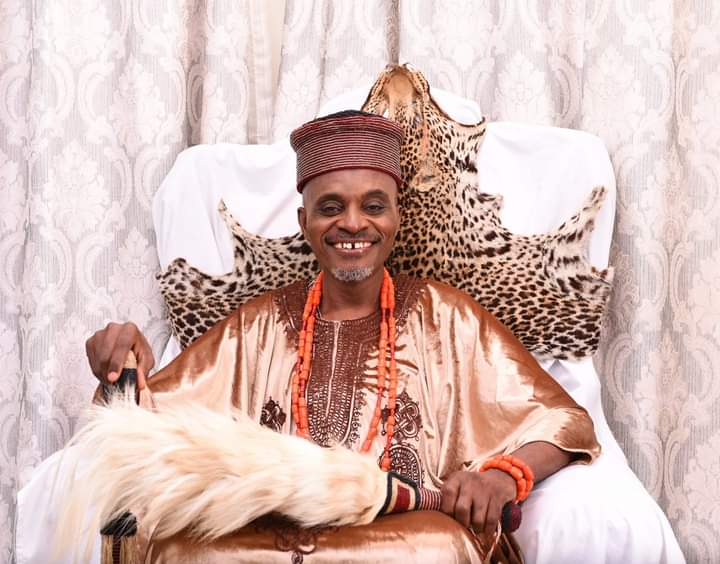
he lineages of the kingship can be traced back to the first Olowu of Owu, son of Oduduwa’s daughter.
Every Olowu that ruled the Owu Kingdom were princes selected from six ruling houses namely Amororo, Otileta, Ayoloye, Akinjobi, Akinoso and Lagbedu. The Oba will be assisted by his appointed chiefs known as Ogbonis and Ologuns.
Other past Olowu who ruled the kingdom of Owu from the genesis before Oba Saka Matemilola include:
- Oba Pawu 1855-1867
(OTILETA Family) - Oba Adefowote
1867-1872 (OTILETA
Family) - Oba Aderinmoye
1873-1890
(OTILETA Family) - Oba Adepegba
1893-1905
(AYOLOYE Family) - Oba Owokokade
1906-1918
(OTILETA Family) - Oba Dosunmu
1918-1924
(AMORORO Family) - Oba Adesin
1924-1936
(OTILETA Family) - Oba Adelani
Gbogboade 1938-1946
(OTILETA Family) - Oba Salami Gbadela
Ajibola 1949-1972
(AYOLOYE Family) - Oba Adebowale
Oyegbade 1975-1980
(AKINJOBI Family) - OBA Michael
Oyelekan April 29th,
1987 -May 8th, 1987
(AKINOSO Family) - Oba Olawale Adisa
Odeleye 1993-2003
(LAGBEDU Family) - Oba Adegboyega
Dosunmu Amororo II
From 2005-2021.
Historically, the history of Owu kingdom is gloomy and there have been several conspiracy theories that surround her history. Based on the oral sources, the founding of Owu Ipole which was formerly known as Orile-Owu was shortly after the settlement of Oduduwa in Ile – Ife. Like they said Owu was the first to be founded after Ile – Ife. Going by oral tradition, it is believed that the Owu occupied an area directly along and below Niger River in the present country of Nigeria. Orile-Owu later expanded and became a very popular and powerful Yoruba settlement, which eventually attained the status of a kingdom of great repute. It became a force to be reckoned with within Yoruba land, particularly between the late 18th and early 19th centuries.
During the second half of the 19th century, Orile-Owu began to decline due to hunger, persistence war and insecurity over their lives and properties resulting from slave raiding. Therefore, they had to evacuate the territory in search of a secure place in order to ensure their survival. The Owus moved out of their settlement and escaped southwest in groups for safety in the face of heavy external aggression (Chief Olalere per comm., 2011).Their initial settlement was destroyed as a result of the late 19th century intra-sub-ethnic wars.
This caused a lot of damage to the people and in response to the threat, the Owus had to move out of the territory to take refuge in neighboring kingdoms, which is why there is wide dispersal of the Owus all over the country. Owu settlements can be found today mostly in Yoruba communities like Abeokuta, Lagos, Igbomina land in Kwara State. Based on the account given by Ogundele and Babalola, 2007:60; Ogundele and Ebonine: 2010, the fall of Old Oyo empire in the early 19th century, coupled with the final invasion of Orile-Owu in 1825 was pertinent to the demographic changes in southern Yoruba land.
After moving out of their former territory for a new settlement which is Ibadan,, the rulers of Ibadan, upon hearing the impending Owus attack on their territory, they immediately send diplomatic emissaries to them. On the contrary, unlike earlier settlements, the Owus did not stage any war or violence attempt against the army of Ibadan, instead they peacefully moved into the town, this was unlike their initial territory where they made use of force and war. As a response towards their peaceful gesture, the monarchs of Ibadan provided them territory to settle (Ita Lisa to Owu Ipole near Ikire).
Going forward, they also settled in Abeokuta among the people of Egba. The Owus people had engaged in several wars (Owu war) and won battles. They moved from territory to territories, which is why today they can be found in the Niger River, Lagos State, Epe, etc. Moreover, they can not be classified neither as Ijebus or Egbas.

 DAILY DIGEST