By Olufemilade Oyinade
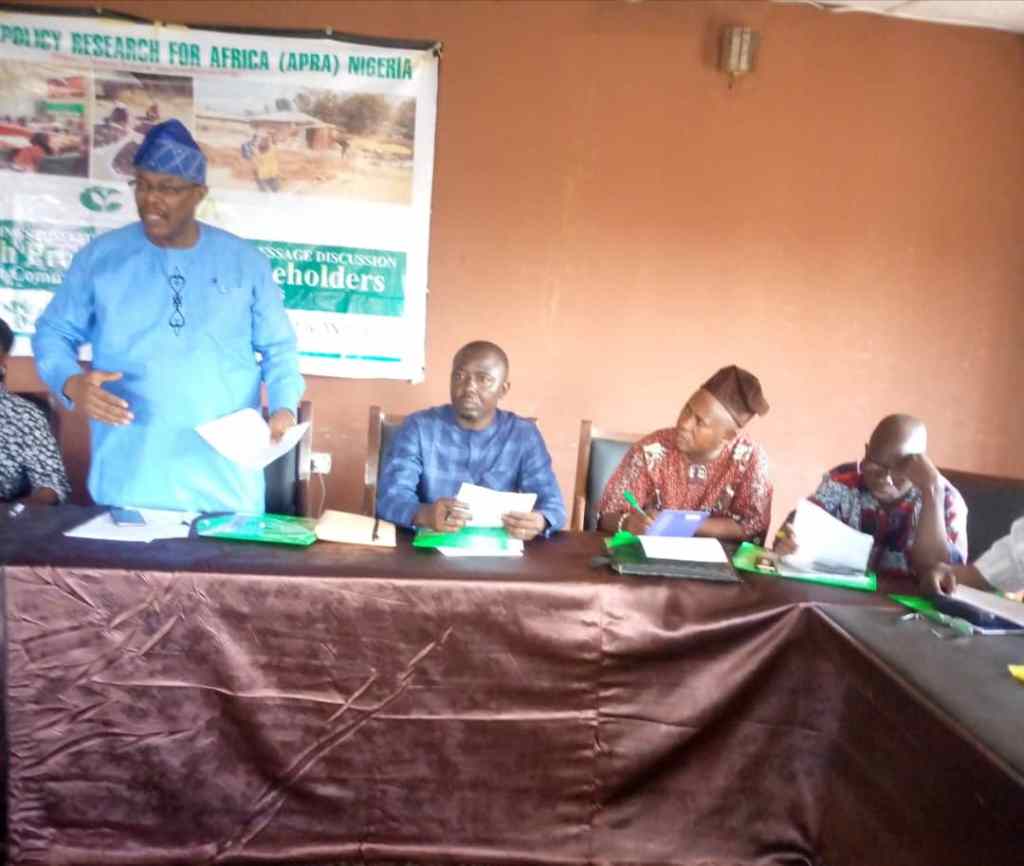
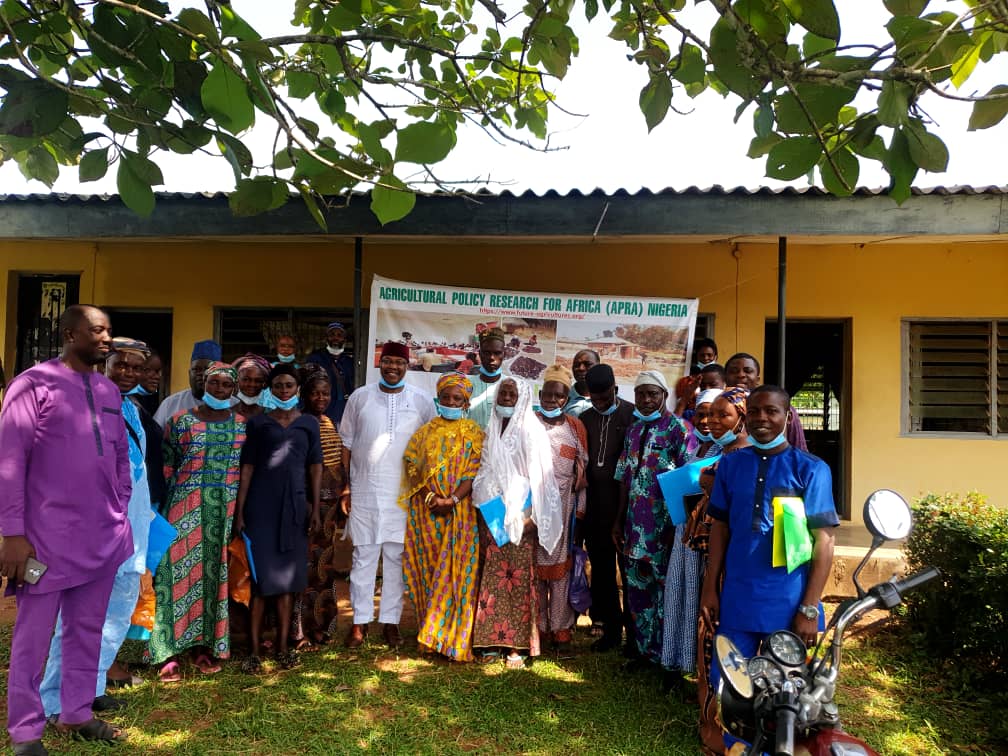
Farmers and community leaders in Ogun State gathered at two separate stakeholders’ meetings held at the palace of Onimeko of Imeko and Ijebu East Local Government Headquarters, Ogbere from November 22 to 23, 2021, respectively for a research finding dissemination workshop organized by the Agricultural Policy Research in Africa (APRA), a research consortium funded by Foreign Commonwealth & Development Office (FCDO), UK.
Speaking at the event, the country’s Coordinator of the programme in Nigeria, Prof Adebayo Aromolaran of Adekunle Ajasin University, Akungba Akoko, stated that APRA was focused on working with key Nigerian stakeholders in agricultural and rural development to identify strategies for helping to improve the livelihoods of farm families, women, and youths across Nigeria by providing research-based evidence to support the need for concrete changes in the food and agricultural systems of Nigeria.
Prof Aromolaran explained that APRA Nigeria Work Stream 1 research team has been working in Imeko Afon, Obafemi Owode and Ijebu East LGAs of Ogun State and chikun, kachia and soba LGAs of Kaduna state since 2018 and the research project, according to him, was focused on investigating the potential opportunities and challenges associated with medium-scale farming as a pathway to inclusive agricultural commercialization and improved livelihood outcomes for farm families across Nigeria.
On the key findings of the research programme, Aromolaran stated that less than 6 percent of small-scale farms in Ogun and Kaduna states had stepped up to medium scale (5 hectares and above) in decades, principally because of poor access to land and complementary inputs for expansion
He informed participants that the study found that interactions of medium scale farms with small scale farms around them could increase the productivity and incomes of small-scale farms and reduced poverty among them.
The country’s Coordinator also informed the participants that certain cultural and socio-economic constraints were preventing women and youths from cultivating commercial tree crops, which has the potential to improve their livelihoods substantially, stressing that increased access to land and labour markets, extension services, all-weather roads, and agro-dealer services were found to be major drivers of agricultural commercialization in Nigeria. He assured that if all these challenges were well addressed, a significant number of farm families in Nigeria would move out of poverty.
Onimeko of Imeko, Oba Benjamin Olanite, represented by Chief Segun Olaleye appealed to APRA to put in all efforts to ensure effective implementation of their findings by policy makers at all levels of government in Nigeria.
Chief Ismail Abdulazeez and Sotunde Adeolu and both farmers’ association leaders said upgrading of farmers from small scale to medium scale level would give more hope to farm families, as this was found to result in increasing productivity and incomes.
Alhaja Risikat Adenokun, a female community leader in Ijebu East said that a major challenge that small scale farmers currently facing were underpricing of their farm produces by traders. She wondered whether the APRA study could help address this challenge.
The meetings gave opportunities to participants to deliberate on the various issues raised by the APRA research project and recommended the specific roles that government, private sectors and communities could play in addressing the issues. Participants were informed that the output of their deliberations would form part of the issues to be tabled at a national stakeholders’ meeting that would be organized by APRA on December 16, 2021.
Similar stakeholders’ key findings dissemination meetings were held in chikun and soba LGAs of Kaduna state from November 15 to 16, 2021.

 DAILY DIGEST